

Swing trading is an exercise in measured judgement: you hold positions for days to weeks, you tolerate overnight risk, and you pay attention to financing, corporate events and execution quality rather than to microsecond latency. That profile changes what you should expect from a broker. The broker is not an afterthought; it is plumbing that determines your realised costs, how reliably stops execute, how dividend and rollover adjustments are applied, and whether you can withdraw profits when you want. The choice between STP, ECN, dealer desk, direct market access or hybrid is therefore an operational decision, one about predictable execution, transparent fees and adult-level dispute resolution, not a marketing slogan. Below I explain how each execution model behaves for swing trading, what trade-offs matter in real money conditions, and how to test a broker so the abstract promises meet the reality of your live account.
This article focuses on helping you find a good swing trading broker. It’s the first swing trading page if you want to learn more about swing trading. If you want a more comprehensive guide to swing trading then we recommend that you visit the website SwingTrading.com. Swingtrading.com is a website completely devoted to swing trading. The website features guides and tips on how to become a better swing trader, as well as reviews of swing trading brokers and a lot more.
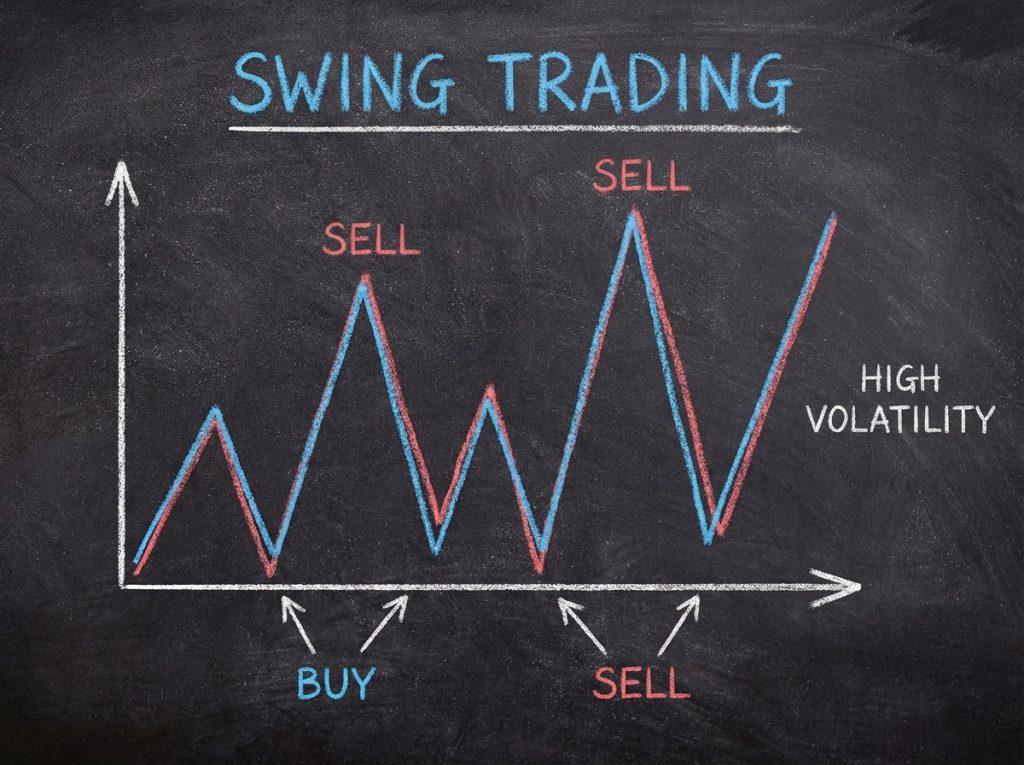
What matters for swing traders
Swing traders care about a small number of concrete things more than anything else. First, cost across the full holding period: entry spread, explicit commission, and overnight financing or swap. Second, how stops and limit orders are handled when markets gap or liquidity thins overnight. Third, corporate action and dividend treatment for stock based trades. Fourth, platform stability and the broker’s withdrawal and KYC process because locked funds wreck a strategy. Fifth, regulatory status and client money protections, because those materially affect dispute outcomes and recovery probabilities. If a broker is excellent in these five dimensions it will support reliable swing performance; if it fails, good signals will be eaten by friction or by operational surprises. Execution model, STP, ECN, dealer desk or DMA, influences these dimensions, but it is not the only factor. The legal entity, the broker’s upstream relationships and the account tier you get matter at least as much.
Dealer desk (market maker) and swing trading
A dealer desk broker typically internalises flow and posts the bid and ask you see. For a swing trader this model offers a mixed bag. On the positive side a reputable market maker can provide consistently two sided markets for small and moderate ticket sizes, often without explicit commission. That simplicity is attractive when you prefer few surprises and low nominal friction at small size. On the negative side the costs are normally embedded in the spread and can widen during volatility or near corporate events. Because the broker can internalise positions there is an inherent business conflict of interest: they may profit when retail accounts lose. Most credible market makers mitigate the conflict by routing and hedging with external liquidity providers, but mitigation is a practice matter you should verify empirically rather than accept on trust.
For swing trades the dealer desk model is acceptable when the broker publishes clear financing formulas, handles corporate actions correctly, and demonstrates consistent spread behaviour at your trade size. If you rely on guaranteed stops for overnight risk reduction check the fee and the exact terms because market makers often charge for guaranteed protection. If the broker documents segregation of client funds and sits under a recognized regulator, the practical disadvantages of a market maker are reduced. But if the provider hides the legal entity, imposes opaque withdrawal rules or uses aggressive marketing to upsell leverage, treat the whole proposition as risky regardless of the execution label.
STP brokers and swing trading
STP brokers route orders automatically to upstream liquidity providers. They typically show a blended quote reflecting several sources and may add a small markup. For swing traders STP offers a pragmatic middle ground: execution that is closer to interbank pricing than many market makers, without the explicit commission accounting of some ECN models. The key advantages are more consistent spreads in normal conditions and fewer discretionary requotes than you might see with a small or unscrupulous market maker.
STP models sometimes still internalise small tickets, and routing logic varies by broker tier, so the label STP does not guarantee uniform treatment. What matters for a swing trader is whether the STP broker publishes its funding formula, whether it discloses the liquidity providers used for your account tier, and how it behaves during holidays and corporate events. Many swing traders favor STP for FX or CFDs because the model balances cost and simplicity: you usually get decent spreads, financing is disclosed, and the broker has less incentive to actively work against your fill. Still, always verify by running a funded sample: measure the spread distribution at your ticket size, confirm overnight swap postings match the published formula, and test withdrawal processing.
ECN and DMA brokers and swing trading
ECN and DMA setups expose your orders to a multi- participant order book or to direct wholesale liquidity. They usually split spread and commission clearly: raw spreads can be tight, and you pay an explicit per lot commission. For swing traders the advantages are transparent execution costs and typically better pricing for larger tickets. If you trade large blocks or multiple correlated positions, the ECN/DMA route often scales more favourably because visible depth reduces the chance of sudden slippage when you enter or exit.
The downside for the average swing trader is practical: commissions add to bookkeeping, some ECNs impose minimum order sizes or charge small-ticket fees, and raw depth evaporates in thin sessions or on holidays. ECN is the best choice when you trade larger sizes and when you value execution transparency over convenience. For most retail swing traders who run modest sizes on major names, ECN can be efficient but it is not strictly necessary. What truly matters is whether the broker offers consistent execution across the hours you trade and whether the commission schedule keeps your all-in cost below the expected edge.
Hybrid models and pragmatic reality
Most modern brokers are hybrids. They route some flow to external liquidity providers and internalise other flow depending on size, time of day and client segment. A hybrid can be the sensible business choice: it lets the broker keep costs low for small retail flow while protecting itself on large or volatile orders. For a swing trader a hybrid often combines the best of STP and market maker models: generally good spreads, transparent overnight financing, and hedging practices that reduce the most dangerous principal conflicts.
The critical caveat is transparency. A hybrid is fine if the broker documents routing rules, provides execution reports, and does not selectively degrade service for retail clients. It is a problem when routing is secret, when demo accounts have systematically friendlier fills, or when the broker refuses to disclose whether your account sits in the same pool as institutional clients. When a hybrid model is implemented transparently, it is probably the best practical option for most swing traders because it balances cost and operational resilience. When it is opaque, the label merely hides risk.
How to choose among models in operational terms
Do not pick primarily by label. Pick by how the broker behaves for your trades in real conditions. Start by quantifying your typical trade: instrument, ticket size, expected hold days, and exposure to events. Compute expected all-in cost for a representative trade using the broker’s published numbers: quoted spread at entry, explicit commission, expected worst-case slippage, and financing per holding day times expected days. Compare that cost against your strategy’s expected move. Then validate by running a funded micro-test with that broker for a meaningful number of trades across normal and event conditions. During the test collect the quoted spread at order time, the executed price, the overnight financing posted, and any anomalies in stop execution. Try a withdrawal after a profitable period to confirm cash-out mechanics.
Also demand documentary evidence. Ask which legal entity will hold your funds, which regulator oversees that entity, and whether client funds are segregated. Ask the broker to provide a sample execution report for the instrument and size you use. If the broker resists or gives vague answers, treat that as a red flag regardless of whether they call themselves ECN or STP.
Asset class nuances
The best model also depends on what you trade. For FX and major CFDs many swing traders prefer STP or a transparent hybrid because spreads matter and commission-free accounts sometimes hide markups. For equities, a regulated securities broker with clear custody arrangements is more important than ECN capability; ECN-like execution is less useful for multi-day equity swing trades than correct dividend handling and fast corporate action adjustments. For futures, direct clearing via an exchange member adds practical safety for multi-day positions because daily margining reduces counterparty uncertainty. For crypto, the execution model is only one part of the risk: custody quality, exchange solvency and withdrawal processes are equally or more important.
Platform features that matter more than model labels
Order types and stop behaviour, reliable timestamps and trade confirmations, exportable trade history, and transparent financing and corporate action rules matter more to swing traders than whether the broker routes via ECN or STP. Guaranteed stop options can be worth paying for if you cannot monitor positions continuously. Robust mobile and desktop clients that give identical prices and the ability to place limit exits in advance are practical necessities. Finally, good customer support and a documented, prompt withdrawal process convert theory into usable cash. None of these features is guaranteed by a label; you must verify them.
Practical due diligence steps
Before you fund an account, do three tests. First, document test: request the legal entity name that will contract with you and verify the regulator’s register. Second, cost test: compute expected all-in round trip cost and run a micro live test for at least 30 trades that covers a quiet week and a scheduled event. Log quoted spread and executed fills; reconcile nightly financing fees. Third, withdrawal test: after the micro test request a withdrawal to the same source you used to fund and measure the time, fees and friction. If the broker fails any test, move on. These steps convert marketing claims into observed behaviour and prevent many of the common surprises that ruin swing programs.
Final practical recommendation
For most swing traders an STP or a transparent hybrid broker is the pragmatic choice because these models balance reasonable spreads, disclosed financing and fewer discretionary execution quirks. ECN/DMA is preferable when you trade larger sizes and need visible depth and commission transparency. A reputable market maker can work for small accounts if it publishes clear funding terms and demonstrates honest withdrawal behaviour, but market makers with opaque entities or aggressive promotion should be avoided.