

Understanding Strategy Hopping in Trading
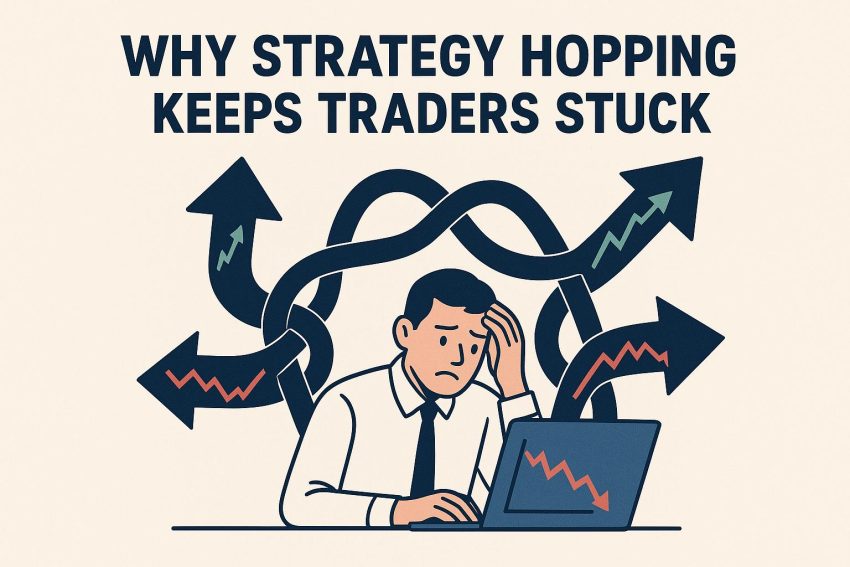
Trading is an endeavor that necessitates not only patience and discipline but also the implementation of a well-defined strategy. Despite understanding this, numerous traders often find themselves caught in a pattern of endlessly switching strategies, a phenomenon commonly referred to as “strategy hopping.” This continual shift from one method to another may obstruct traders from realizing consistent success in their trading efforts.
What is Strategy Hopping?
Strategy hopping involves the frequent alteration of trading strategies, typically in pursuit of the so-called “perfect” method or as a reaction to short-lived market conditions. While it is crucial to adapt to changing markets, incessant modifications to strategies can result in inconsistency and unpredictability in trading outcomes.
Causes of Strategy Hopping
Several factors contribute to the tendency among traders to engage in strategy hopping, each carrying its own implications for trading behaviors:
Lack of Patience: Trading strategies require adequate time to manifest their full potential. Many traders, driven by impatience, may abandon a strategy prematurely if they do not observe immediate success, not giving the strategy a fair opportunity to prove its effectiveness.
Fear of Missing Out (FOMO): The constant urge to capitalize on every possible market opportunity can compel traders to continually modify their strategies, sometimes without considering the volatility or suitability of the new approach.
External Influence: The impact of opinions from trading influencers, forums, or peers can lead traders to doubt their strategies, causing them to alter their approaches based on perceived external validation rather than internal strategy performance.
Market Volatility: Abrupt fluctuations in market behavior might deceptively encourage traders to switch strategies, often under the false assumption that an alternative method might yield higher profits in volatile market conditions.
Long-term Impacts of Strategy Hopping
Engaging in strategy hopping can have a range of profound negative impacts on a trader’s long-term performance:
Inconsistent Results: The practice of constantly shifting strategies prohibits traders from gaining a comprehensive understanding of any single method. This inconsistency often culminates in erratic and unpredictable trading results.
Psychological Stress: The ongoing mental exertion required to assimilate and adapt to new strategies can heighten stress levels, potentially impairing a trader’s decision-making capabilities and overall psychological health.
Increased Costs: Frequent changes in strategy can lead to elevated transaction costs and commission fees, attributable to the heightened volume of trades prompted by strategy transitions.
Strategies to Avoid Hopping
Traders can mitigate the propensity to engage in strategy hopping by adopting a structured and disciplined approach to their trading methodologies:
Backtesting: Leveraging historical data to assess the long-term efficacy of a trading strategy can substantially boost confidence in its potential outcomes. Backtesting provides insights into how a strategy might perform under a variety of market conditions, thereby reducing the inclination to frequently switch strategies.
Clear Plan: Formulating a comprehensive trading plan that specifies entry and exit criteria, risk management techniques, and performance evaluation metrics is crucial. An explicit plan serves as a roadmap, facilitating consistency and guiding decision-making processes.
Continuous Education: While continuous education about market trends, innovative strategies, and technological advancements is vital, traders should focus on augmenting their existing strategy rather than replacing it entirely.
Incremental Changes: Adjustments to a strategy should be implemented gradually rather than overhauled abruptly. This measured approach allows traders to methodically evaluate the impact of changes without causing unnecessary disruption to their overall trading process.
Conclusion
Strategy hopping represents a prevalent challenge among traders, one that can significantly impede long-term success. By comprehending the underlying causes and potential repercussions of this behavior, traders can implement strategies to avoid it, ultimately fostering greater consistency and confidence in their trading endeavors. For further reading on trading strategies and understanding market behavior, you may wish to explore additional resources.